
Wildlife Removal Questions, Answered
69 answers covering methods, Georgia regulations, timing and every species Tyler handles.
General Questions
Reviewed September 2026.
What areas does Local Wildlife Expert serve?
Tyler Hickory serves 39 cities across Northeast Georgia, from Hartwell and Royston in Hart and Franklin counties through to Buford, Suwanee and Lawrenceville in Gwinnett County. There are no travel fees within the standard service area.
Do you offer same-day or emergency wildlife removal?
Yes. Same-day service is available across most of the service area and emergency calls are prioritized regardless of location. Calls go directly to Tyler — there is no dispatcher or call center in between.
Who actually does the work?
Tyler Hickory personally handles every job from the first phone call through inspection, humane removal, exclusion and repair. The company is deliberately owner-operated, so the person who quotes the job is the person who does it and guarantees it.
Are your wildlife removal methods humane and legal in Georgia?
Yes. All removal work follows Georgia Department of Natural Resources Wildlife Resources Division regulations, including seasonal restrictions such as the bat maternity period. Tyler is NWCOA certified and uses live trapping and one-way exclusion devices rather than lethal methods wherever possible.
Is the work guaranteed?
Yes. Exclusion work is guaranteed against re-entry through any sealed entry point. If an animal gets back in the same way, Tyler returns at no charge.
Is a free inspection really free?
Yes. The inspection and the quote that follows are free, with no obligation. Tyler identifies the species, locates every entry point, and assesses the damage before any work is quoted.
Questions by Service
Raccoon Removal
See raccoon removal details →How do raccoons get into my attic?
Raccoons are incredibly strong and can tear open soffit panels, roof vents, and damaged fascia boards. They often exploit existing gaps at roof-soffit intersections or push through weakened construction joints.
Is raccoon removal humane?
Absolutely. Tyler uses live cage traps and one-way exclusion doors. Mother raccoons are never separated from their young. All methods comply with Georgia DNR wildlife regulations.
How long does raccoon removal take?
Most raccoon removals are completed within 3-7 days, depending on the number of animals and complexity of entry points. Tyler will give you a clear timeline during your free inspection.
Will raccoons come back after removal?
Not through sealed entry points. Tyler uses heavy-gauge galvanized steel and commercial-grade materials to permanently seal all access points. His exclusion work is guaranteed.
Squirrel Removal
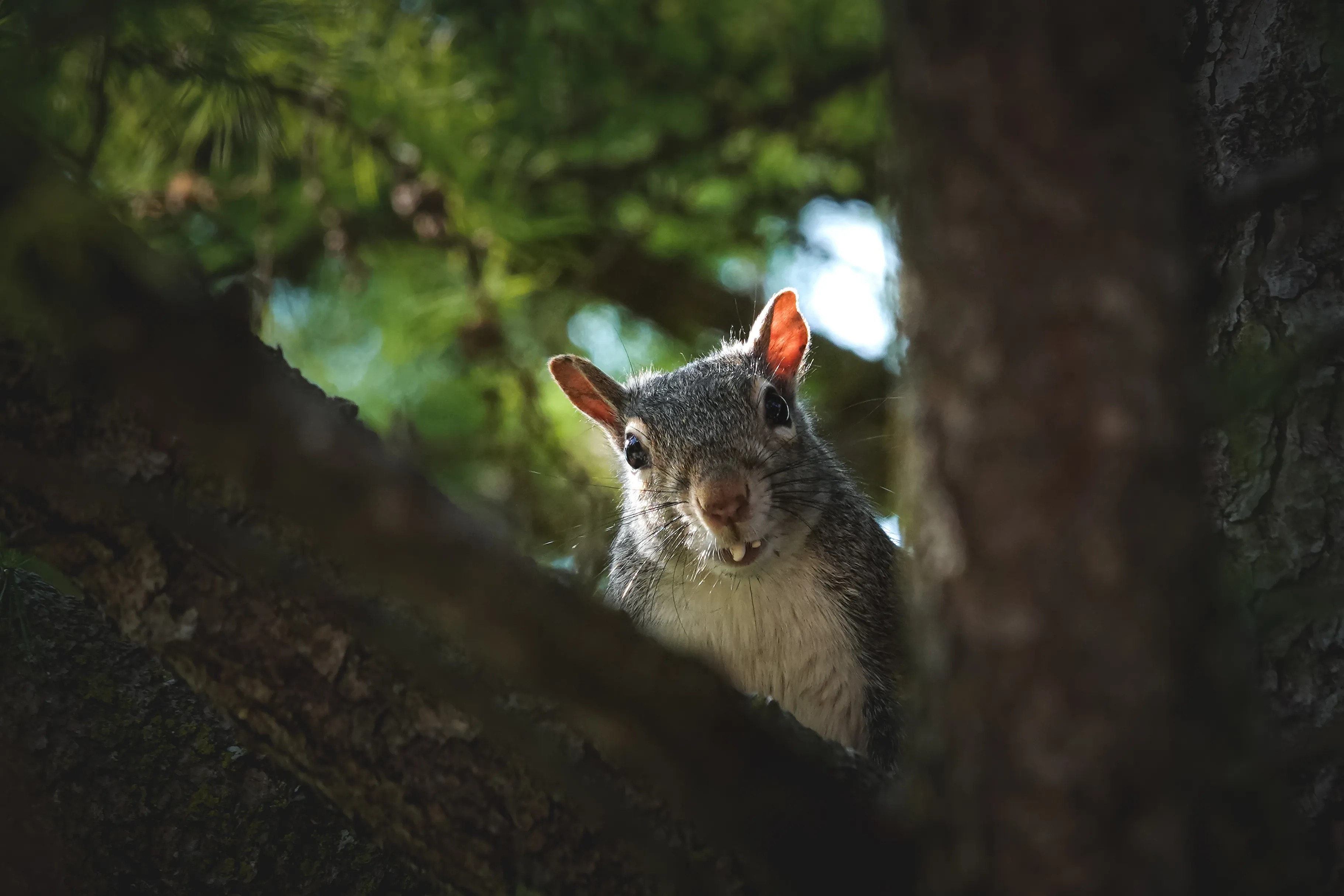
See squirrel removal details →How do squirrels get in my attic?
Squirrels only need a gap of about 1.5 inches. They commonly enter through roof returns, soffit gaps, gable vents, and plumbing or electrical penetrations. They can also chew new holes through wood and vinyl.
Are squirrels dangerous?
Squirrels themselves rarely attack humans, but they create serious fire hazards by chewing electrical wiring. They also contaminate attic insulation and can cause water damage by creating entry holes.
What's a one-way exclusion door?
It's a device installed over the squirrel's main entry point that allows them to exit normally but prevents re-entry. It's the most humane and effective removal method available.
How quickly can you remove squirrels?
Most squirrel exclusions are complete within 5-10 days. Tyler monitors the one-way doors and confirms all squirrels have exited before permanent sealing.
Bat Removal
See bat removal details →When can bats be removed in Georgia?
Georgia DNR prohibits bat exclusion during maternity season (approximately May 1 through August 15) when flightless pups may be present. Tyler will advise you on the best timing for your situation.
Is bat guano dangerous?
Yes. Bat guano can harbor the fungus that causes histoplasmosis, a serious lung infection. Professional cleanup with proper respiratory protection is essential. Do not attempt to clean bat guano yourself.
How many bats could be in my attic?
Colonies vary from a few individuals to several hundred. Tyler will assess the colony size during inspection and develop an appropriate exclusion plan.
Will the bats come back?
Not if all entry points are properly sealed. Bats are loyal to roost sites, so thorough sealing is critical. Tyler's exclusion work is guaranteed against re-entry.
Rodent Control
See rodent control details →How do I know if I have rats or mice?
Droppings are the easiest indicator. Mouse droppings are small (1/4 inch), while rat droppings are much larger (1/2 to 3/4 inch). Tyler will identify the species during inspection and tailor the approach accordingly.
Do you use poison?
Tyler avoids rodenticides whenever possible because poisoned rodents often die inside walls, creating odor problems. Strategic trapping combined with exclusion is more effective and avoids secondary issues.
How fast can you eliminate rodents?
Active trapping typically reduces the population within 1-2 weeks. Complete elimination, including exclusion and monitoring, usually takes 2-4 weeks depending on infestation severity.
Will rodents come back?
Not through sealed entry points. Tyler's exclusion work uses rodent-proof materials and is guaranteed. He also advises on property modifications to reduce future attraction.
Snake Removal
See snake removal details →Is this snake venomous?
Do not approach or attempt to identify the snake yourself. Call Tyler immediately — he'll be there same-day to safely capture and identify the species. Northeast Georgia has copperheads and timber rattlesnakes.
How do snakes get in my house?
Snakes enter through gaps in foundations, unsealed pipe penetrations, garage door seals, and damaged crawlspace vents. They follow prey (mice and rats) indoors.
Can you prevent snakes from coming back?
Tyler can identify and seal common snake entry points and advise on habitat modifications — removing wood piles, managing tall grass, and addressing rodent populations — that make your property less attractive to snakes.
Do you kill the snakes?
No. Tyler relocates all snakes safely, including venomous species. Many Georgia snakes are beneficial and help control rodent and insect populations.
Bird Removal
See bird removal details →Can I remove bird nests myself?
Some species are protected by federal law, making unauthorized nest removal illegal. Tyler knows which species are protected and handles removal legally and safely.
Do birds cause real damage?
Absolutely. Nests in dryer vents are a leading cause of house fires. Bird droppings are acidic and damage paint, wood, and metal. Parasites from nests can enter your living space.
How do you keep birds from coming back?
Tyler installs heavy-duty vent covers, stainless steel screens, and bird deterrent systems designed for long-term prevention. All installations are warranted.
What about woodpeckers?
Woodpeckers are federally protected. Tyler uses legal deterrent methods including visual deterrents, sound devices, and physical barriers to redirect woodpecker activity away from your home.
Opossum Removal
See opossum removal details →Are opossums dangerous?
Opossums are generally non-aggressive and rarely carry rabies due to their low body temperature. However, they can bite if cornered and may carry fleas, ticks, and other parasites.
Why is an opossum under my deck?
Opossums seek sheltered, dark spaces for denning, especially during cold weather or breeding season. Gaps under decks, porches, and sheds provide ideal harborage.
How do you keep them from coming back?
Tyler seals all access points under decks and around foundations with heavy-gauge galvanized wire mesh that withstands weather and digging. His exclusion work is guaranteed.
Is opossum removal humane?
Yes. Tyler uses live cage traps, checks them daily, and relocates opossums to appropriate habitat away from residential areas.
Skunk Removal
See skunk removal details →Will the skunk spray during removal?
Tyler uses specially designed covered traps and careful handling techniques that greatly reduce the chance of spraying. His experience with skunks means minimal odor risk.
Can you remove skunk smell?
Yes. Tyler provides professional odor neutralization treatment for affected areas. Commercial-grade products are far more effective than home remedies.
Are skunks dangerous?
Skunks can carry rabies and should never be approached. Their spray causes intense irritation and temporary blindness. Always call a professional for skunk removal.
How do you prevent skunks from returning?
Tyler installs buried exclusion barriers around deck and porch perimeters that prevent digging access. These galvanized steel barriers are designed for permanent prevention.
Groundhog Removal
See groundhog removal details →Can groundhog burrows damage my foundation?
Yes. Groundhog tunnels running alongside or under foundations can channel water toward the foundation, cause settling, and create voids that undermine structural support.
How deep do groundhog burrows go?
Groundhog burrows typically extend 2-5 feet deep and can stretch 15-25 feet in length with multiple chambers and exits. They're far more extensive than what's visible on the surface.
Will filling the burrow solve the problem?
Not without first removing the groundhog. A trapped groundhog will simply dig new exits. Tyler removes the animal first, then properly fills and compacts the burrow system.
How do you protect my garden?
Tyler can install buried galvanized mesh barriers around garden perimeters that prevent groundhog digging access. These barriers extend below ground to block tunneling.
Beaver Removal
See beaver removal details →Can I remove a beaver dam myself?
Removing a dam without first addressing the beaver population is ineffective — beavers will rebuild overnight. Additionally, dam removal can cause sudden downstream flooding if not managed properly.
How much damage can beavers cause?
Beaver dams can flood acres of property, kill trees through prolonged root submersion, wash out driveways and roads, and damage septic systems. The economic impact can be severe.
Is beaver removal legal in Georgia?
Yes. Beavers that are causing property damage can be legally removed in Georgia. Tyler ensures all removal is conducted in compliance with state regulations.
Will more beavers move in?
It's possible if the habitat remains attractive. Tyler can install flow control devices and recommend property modifications that make the area less appealing to future beaver activity.
Armadillo Removal
See armadillo removal details →Why are armadillos digging up my yard?
Armadillos are insectivores — they're digging for grubs, earthworms, and beetle larvae in your soil. A healthy grub population means persistent armadillo activity.
Can armadillos damage my foundation?
Yes. Armadillo burrows near foundations can channel water toward the structure and create voids that cause settling. Multiple burrows compound the risk.
Are armadillos dangerous?
Armadillos are not aggressive but should not be handled. They are the only animal besides humans known to carry leprosy (Hansen's disease), though transmission risk is extremely low.
How do I keep armadillos away permanently?
Reducing grub populations through lawn treatment makes your property less attractive. Tyler can also install buried barriers around garden beds and foundation perimeters.
Dead Animal Removal
See dead animal removal details →How long will the smell last without removal?
A dead animal odor can persist for 2-8 weeks depending on the animal's size and environmental conditions. Removal and treatment eliminates the odor immediately rather than waiting for natural decomposition.
Can you find an animal inside a wall?
Yes. Tyler uses thermal detection and extensive experience to locate dead animals in walls with minimal cutting. He'll also patch and repair any access points created during extraction.
Is a dead animal in my home a health hazard?
Yes. Decomposing animals attract flies, beetles, and other insects that can spread throughout your home. Bacteria and parasites from the carcass can also pose health risks.
How quickly can you respond?
Tyler offers same-day dead animal removal for most service areas. Call early in the day for fastest response.
How do you remove a dead deer from my yard?
Tyler arrives same-day with the equipment needed to safely remove deer of any size. He removes the carcass, sanitizes the ground where it lay, and applies odor neutralization treatment to eliminate any lingering smell. The entire process typically takes under an hour.
Can you remove roadkill from my property?
Yes. If a deer or other large animal was hit near your home and ended up on your property, Tyler will remove it promptly. This is especially important in neighborhoods where decomposition attracts coyotes, vultures, and other scavengers.
How much does dead deer removal cost?
Pricing depends on the deer's location and condition. Tyler provides a clear quote when you call — no hidden fees. Most dead deer removals are very affordable and include full site cleanup.
Attic Cleanup
See attic cleanup details →Do I really need attic cleanup after animal removal?
Yes. Animal droppings and urine-saturated insulation harbor bacteria, parasites, and fungi that continue to affect your home's air quality long after the animals are gone.
Will my homeowner's insurance cover attic cleanup?
Many policies cover wildlife damage restoration. Tyler can provide detailed documentation and work with your insurance adjuster to maximize your coverage.
How long does attic cleanup take?
Most attic restorations are completed in 1-2 days, depending on the attic size and extent of contamination. Tyler will provide a clear timeline during your assessment.
Do you replace the insulation?
Yes. Tyler removes all contaminated insulation and installs new blown-in or batt insulation to R-value specifications. Your attic will be better insulated than before.
Damage Repair
See damage repair details →Can you repair electrical wiring?
Tyler repairs and replaces chewed wiring in attic spaces. For main electrical panel work or complex rewiring, he'll coordinate with a licensed electrician.
Do you repair roofs?
Tyler repairs wildlife-related roof damage including vents, flashing, soffit, and fascia. For major roof replacements, he can recommend trusted local roofers.
Will insurance cover wildlife damage repair?
Many homeowner policies cover wildlife damage. Tyler provides detailed documentation including photos, damage descriptions, and itemized estimates to support your claim.
Can you match my existing siding or trim?
Tyler makes every effort to match existing materials for a seamless repair. In cases where exact matches aren't available, he'll discuss options with you before proceeding.
Wildlife Exclusion & Home Sealing
See wildlife exclusion & home sealing details →What's the difference between exclusion and removal?
Removal addresses animals already inside your home. Exclusion seals your home to prevent animals from entering in the first place. The most effective wildlife control combines both.
How long does a full home exclusion take?
A typical home exclusion takes 1-2 days depending on the size and condition of the property. Tyler will provide a timeline during your free inspection.
Is exclusion worth the investment?
A single wildlife intrusion can cost thousands in removal, cleanup, and repair. Preventive exclusion costs a fraction of that and comes with warranty protection. It's the best value in wildlife control.
Do you guarantee your exclusion work?
Yes. Tyler guarantees all exclusion work. If an animal enters through a point he sealed, he returns at no additional charge to address the issue.
Question not covered here? Call Tyler directly — he answers the phone.
(706) 680-1544Wildlife Emergency?
Tyler is Ready to Help — Serving 39 Cities Across Northeast Georgia